AI does not speed up a team until it lives inside the delivery system.
An on-site, two-day intensive for software engineering teams of 5–10 to build one AI-enabled workflow into their actual delivery system – with documentation and guardrails the team can repeat next week.
Delivery speed is typically limited by friction, not effort.
As products mature, the delivery system accumulates drag. More dependencies. More coordination. More review surface area. More places where work has to wait.
Cycle time stretches. “Small” changes take longer than expected. Leadership starts asking whether the answer is more headcount.
AI looks like leverage — until teams actually experiment with it and find inconsistent output, heavier review load, and more verification than anyone wants.
For AI to create real speed it must be built into a specific workflow with a specific purpose and standards.
- Operating modes for different tasksso the model is used with intent.
- Clear scopingso work stays small and steerable.
- Verification loopsso quality stays high.
- Shared patternsso results don’t depend on one enthusiastic engineer.
When those conditions exist, AI becomes throughput.
We apply AI to the team’s delivery system in real time.
We provide context, best practices, and the right constraints. The team applies them immediately to their own repo and workflow.
If your organization has strict constraints (and many do), the workflow is designed to fit them – tighter controls, minimal data exposure, and clear rules for what can and cannot be sent to a model. The goal is always the same: an implementation the team can actually use day to day, not something that gets shut down in week two.
The structure is consistent. The details are tailored to who’s in the room.
Foundations & guided practice
- – What AI coding tools can and cannot do, and how to choose them per task (Claude Code, Copilot, GPT-based assistants)
- – LLM performance trade-offs, context management, and failure modes
- – Operating modes by task type: pairing, scoping, steering, verification
- – Testing, documentation, and validation practices that keep quality intact
- – Pair on a real repo brought by the team
- – Run controlled experiments with prompts, context, and small refactors
- – Compare output quality, speed, and coverage signals using the team’s existing tooling
Team adoption & advanced patterns
- – AI-friendly code organization and boundaries that reduce accidental complexity
- – Patterns for test generation, code review workflows, and documentation routines
- – Options for connecting AI to CI/CD and review flows – where it helps and where it doesn’t
- – Team challenge: implement a feature with AI inside the agreed guardrails
- – Retrospective: what worked, what didn’t, what to keep
- – Identify next best workflows and the plan for scaling inside the organization
Two outcomes. One that ships. One that sticks.
An AI-enabled workflow that is already built, documented, and usable.
Engineers who know how to use AI safely in daily development.
Let’s address them directly.
“We tried AI already and it didn’t work.”
This is common. Most teams first encounter AI through ad hoc experimentation without shared standards, verification loops, or team-wide patterns. Output quality varied, and cleanup cost erased the upside. This intensive is built to produce a working implementation, not a set of opinions. It lands with a documented workflow and a team that can repeat it.
“Engineers will resist.”
Resistance is usually a quality and accountability concern. Engineers get clear guardrails, practical reps in the real repo, and a shared operating model. Adoption comes from results that feel safe.
“This will regress quality.”
Quality loss isn’t caused by AI — it’s caused by how AI is implemented into the workflow. We’ve already solved for this. The workshop treats verification as part of the work, not an afterthought. Tests, small increments, review patterns, and clear limits keep quality stable while speed improves.
Everything in one flat number.
- Two-day on-site workshop (San Francisco – or travel to client)
- Live pairing and guided implementation in the team’s repo
- Documentation for the implemented workflow
- A short report on observed bottlenecks and efficiency opportunities, including non-AI constraints
- A plan for expanding AI workflows across the organization
- 1–2 hours of post-workshop Zoom support within the next two weeks
Teams that want speed without turning AI into a culture fight.
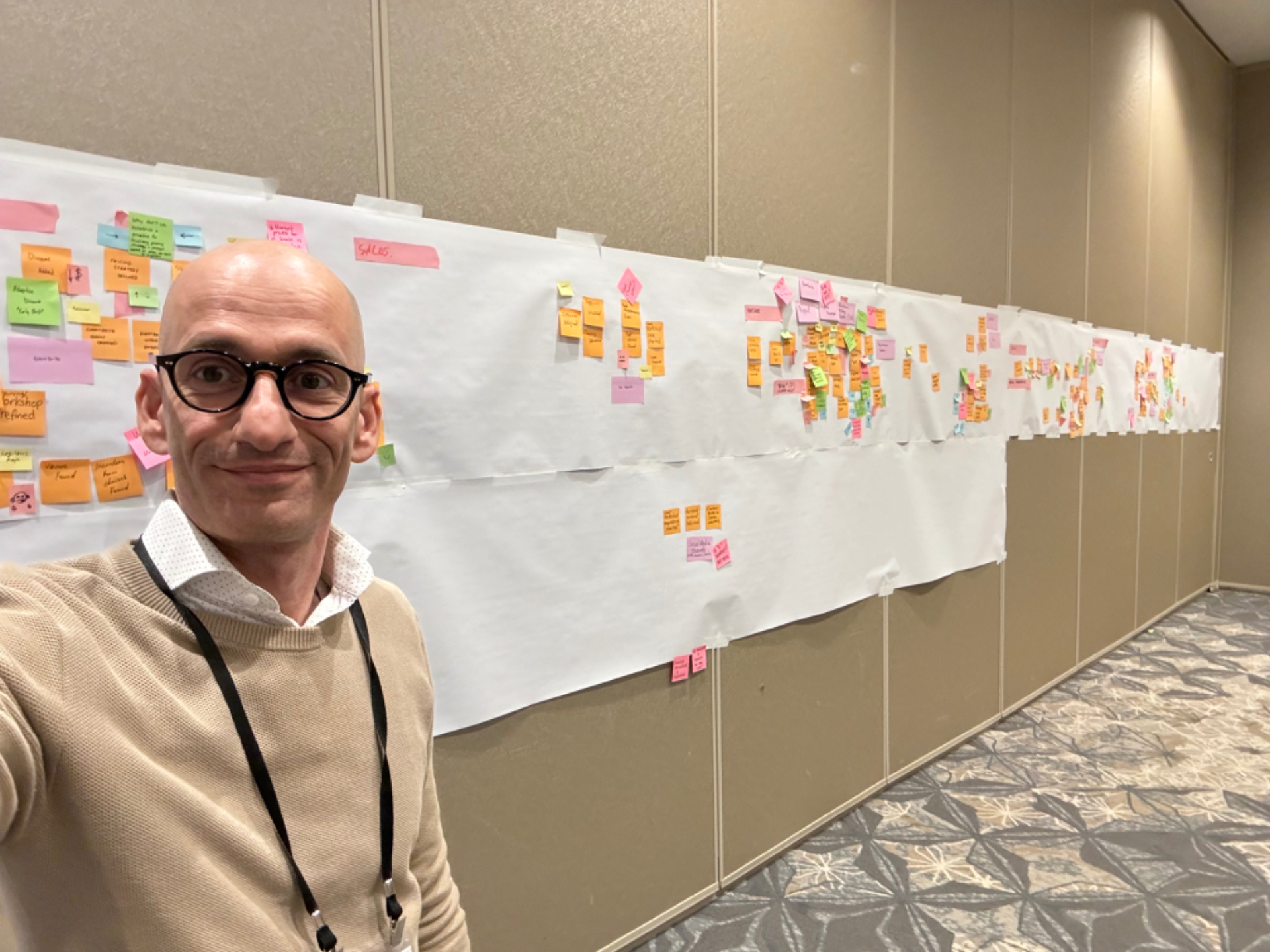
Thanos Diacakis — engineering leader & coach.
Thanos helps software teams increase delivery speed without sacrificing quality or sustainability.
Across 25+ years – including leadership roles at Uber, Included Health, and high-growth startups – he’s built a framework for diagnosing bottlenecks, improving flow, and building autonomous teams.
The last two years have focused on AI-assisted software development in real codebases – Claude Code, GitHub Copilot, GPT-based assistants – spanning greenfield builds and complex legacy systems, with an emphasis on safe adoption, testing discipline, and human control over architecture.
Schedule a fit call to pick the first workflow target and confirm logistics.
We'll confirm team size, security constraints, and the first workflow we'll build together.
Book a fit call →